By Usman Abdullahi Koli
While global headlines remain fixed on wars, economic uncertainty and geopolitical rivalries, a quieter but more consequential shift is underway in the world of energy. The competition now is not just over barrels and megawatts, but over supply chains, long-term capital, cleaner technologies, and the regulatory frameworks that will define economic growth for decades.
Increasingly, those decisions are not made within national borders alone. They are forged on international platforms where governments, industry leaders, investors and researchers build partnerships and seek practical solutions to shared challenges.
That is why Nigeria’s return to the World Energy Council, WEC, deserves more than a passing mention. This is not just another diplomatic affiliation. It is the country’s re-entry into one of the world’s oldest and most influential energy leadership forums at a time when energy security, affordability, sustainability and investment have become defining issues for every major economy.
For Nigeria, Africa’s largest economy and a leading energy producer, the significance goes beyond representation. It offers a strategic platform to shape global policy discourse while advancing national and regional interests.
Founded in 1923, the World Energy Council has spent over a century connecting governments, businesses and researchers across the energy landscape. With member committees in more than 90 countries, it serves as a neutral forum for dialogue rather than a regulatory body.
Its influence lies in uniting diverse voices to address common challenges and promote practical approaches to what it calls the “energy trilemma”: balancing energy security, environmental sustainability and equitable access.
Through flagship initiatives like the World Energy Congress and its authoritative research, the Council has become an indispensable reference point for policymakers and industry leaders.
Nigeria’s renewed membership comes at a pivotal moment. Globally, nations are reassessing energy strategies in response to climate commitments, geopolitical fractures and technological disruption. The conversation has moved beyond production capacity to include resilience, competitiveness, regulatory certainty and the ability to attract stable investment.
Few countries illustrate this challenge more than Nigeria. The nation holds some of the world’s largest natural gas reserves, remains a major oil producer, and has immense renewable potential in solar and hydro. Yet it still grapples with electricity deficits, weak transmission infrastructure, financing gaps and energy poverty.
This makes international engagement a strategic necessity. Participation in the WEC gives Nigeria a conduit to exchange technical knowledge, strengthen institutional cooperation, learn from global best practices, and project African perspectives in conversations that shape investment and policy.
Membership unlocks access to comparative research, executive dialogue, policy networks and collaborative initiatives that can support national reforms. Nigeria could, for instance, leverage the WEC’s scenario tools to chart pathways for gas monetisation alongside solar expansion, or use the Council’s “Energy Trilemma Index” to benchmark regulatory reforms against peer economies.
President Bola Ahmed Tinubu has backed the move. Welcoming Nigeria’s admission, he framed it as an assertion of continental leadership:
“Nigeria has joined the World Energy Council to lead, not just participate – to ensure Africa’s voice shapes global energy decisions.”
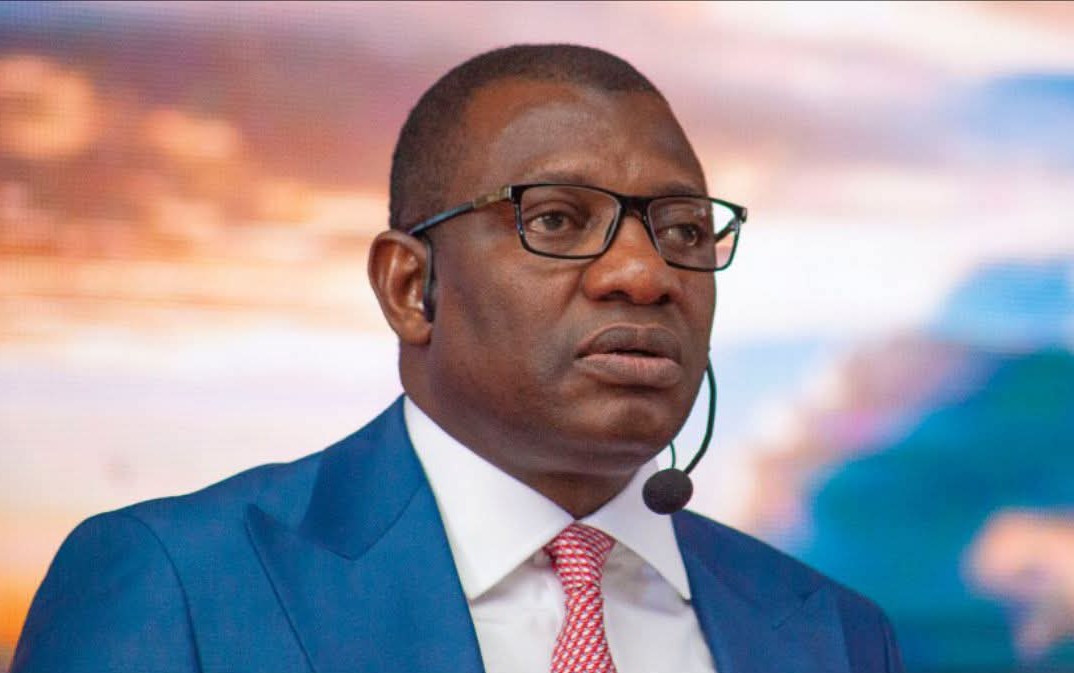
Steering the re-engagement is a newly constituted Member Committee with representatives from government, private sector, academia and international institutions. At its helm is Dr. Bala Maijama’a Wunti, appointed Chief Executive Officer of WEC Nigeria.
On his appointment, Wunti set the tone:
“I am honoured to lead WEC Nigeria at a time of profound economic crosscurrents. We will navigate the energy trilemma with pragmatism, mobilising private capital to ensure Nigeria’s energy future is defined not by ideology, but by investability — delivering prosperity that is bankable, just and secure.”
The statement signals a shift from abstract commitments to measurable, bankable outcomes.
Wunti brings deep operational and strategic experience from Nigeria’s petroleum sector. He most recently served as Chief Health, Safety and Environment Officer at NNPC Ltd. His background in operational management, governance and multi-stakeholder engagement positions him to navigate the complexities of the global energy transition.
His mandate goes beyond administration. He is expected to architect Nigeria’s engagement strategy: fortifying international partnerships, driving policy dialogue, and ensuring Nigerian perspectives actively shape global energy governance.
The broader significance transcends any single appointment. Nigeria’s return signals a recognition that influence in today’s energy landscape depends as much on ideas, partnerships and institutional credibility as on natural resources.
For Nigeria, the WEC is now a strategic instrument to deepen contributions to global energy conversations while advancing domestic priorities.
With the platform active and leadership in place, the task ahead under Wunti is to convert participation into outcomes: stronger cross-border partnerships, more informed policies, increased investment, and a more resilient and inclusive energy sector.
If achieved, Nigeria’s return will be remembered not just as an institutional milestone, but as a decisive step in strengthening the nation’s role in an increasingly interconnected global energy system — with Dr. Bala Wunti standing at the centre of that transformation.
Usman Abdullahi Koli